$5
Compound Interest & Investing | Rule of 72, 401(k) & Roth IRA | Personal Finance
- Rule of 72, 401(k) & Roth IRA
Time is the one investing advantage teenagers have over everyone else. This plan shows it with compound interest first, then adds risk, diversification and the accounts that make long-term investing easier.
Printable resources from our store on Teachers Pay Teachers. What's included is taken from each listing.
Students keep hearing about the new Trump Account (Section 530A). This fact-only mini-lesson lets them test it with math, not opinions.
The first retirement decision most students will face is how much to put in the employer plan. This lab lets them make it with real numbers.
Why does a diversified index fund hold up better than a single stock in a market selloff? And why does a 50% loss need a 100% gain to get back to even?
Your students will see big claims about Trump Accounts online. This lesson teaches them to test those claims against the actual IRS rules and the math, instead of just believing or dismissing them.
Teens already say 'parlay,' 'odds' and 'prediction market.' This no-prep math lab turns that into real probability and personal finance skills, with no lecturing and no team or league names.
Need an investing lesson with no internet, no accounts and no prep?
Your students scroll past money advice every day. This activity teaches them to fact-check it.
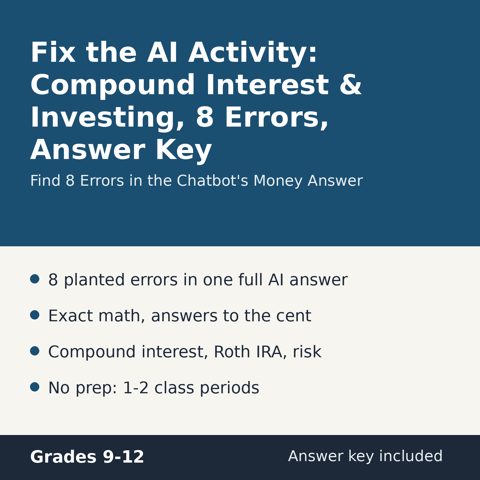
Your students already ask chatbots about money. Can they catch the mistakes?
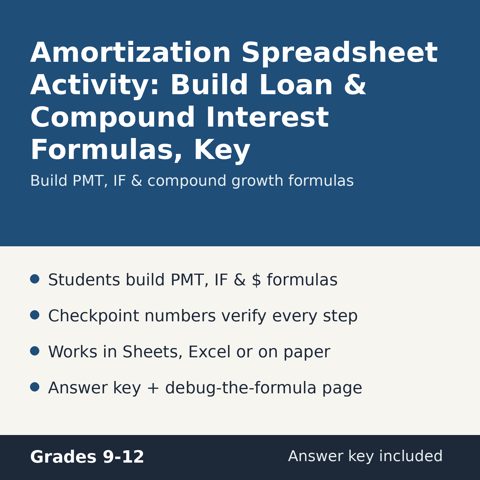
Students don't fill in a worksheet. They build the formulas.
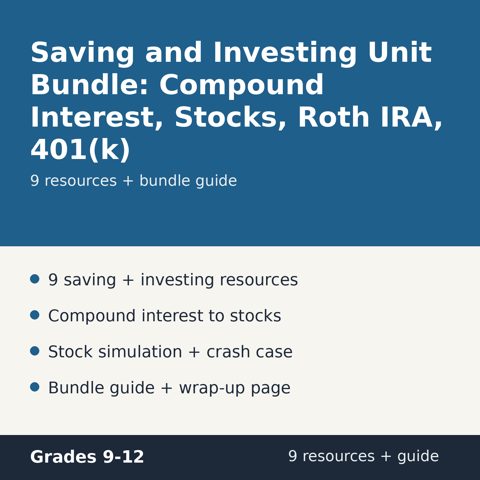
Nine ready-to-teach resources for a high school saving and investing unit: compound interest, savings goals, retirement accounts, a stock market simulation, a market-crash case, a spreadsheet build, and three activities about whose...
11 resources on this topic in total. Browse the whole store on TPT →
A quick estimate: divide 72 by the yearly return to get roughly how many years money takes to double. At 8% it is about 9 years.
A teen with earned income can contribute to a Roth IRA, usually as a custodial account opened by a parent or guardian, up to the smaller of their earnings or the yearly limit.