$5
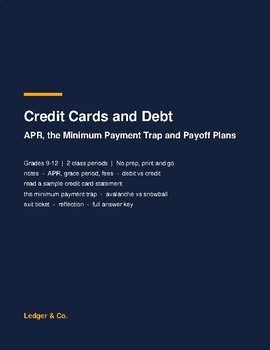
Credit Cards and Debt | APR, Minimum Payments & Debt Payoff | Personal Finance
- APR, Minimum Payments & Debt Payoff
Students sign up for their first card, phone plan or Buy Now Pay Later purchase long before anyone shows them the math. This plan connects the five credit score factors to what a minimum payment really costs.
Printable resources from our store on Teachers Pay Teachers. What's included is taken from each listing.
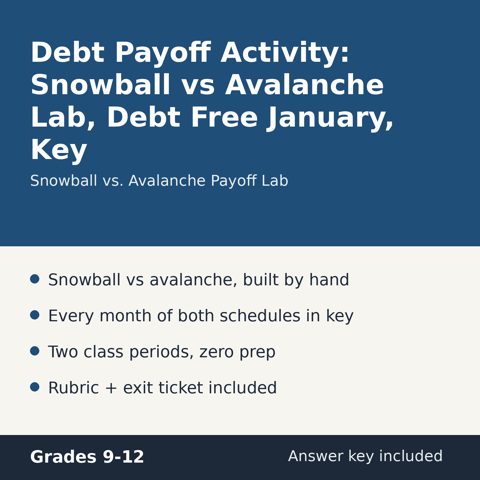
Teach the question every graduate faces once they owe more than one debt: which one do I pay first?
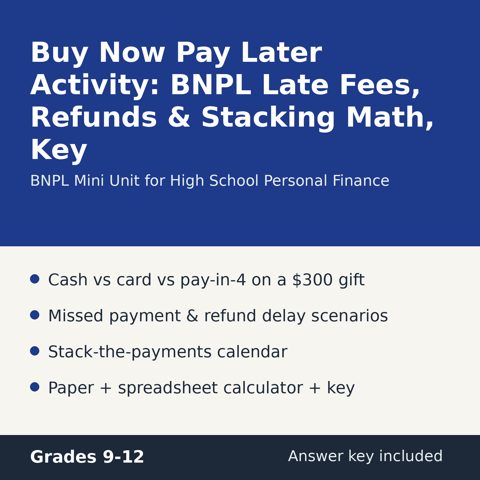
Your students will see Black Friday deals everywhere. This mini unit shows them what 'pay in 4' really costs.
Teaching credit before break?
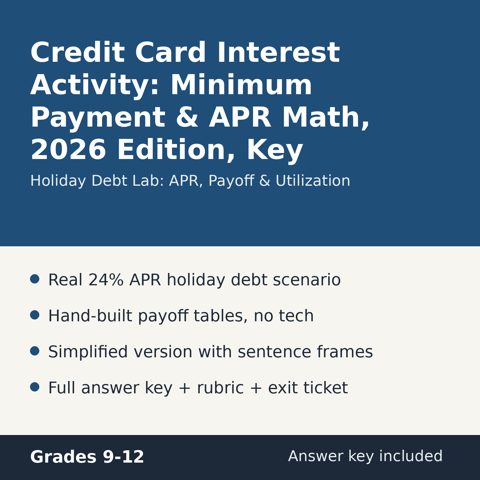
Teach how credit card interest really works with one realistic holiday scenario and real math.
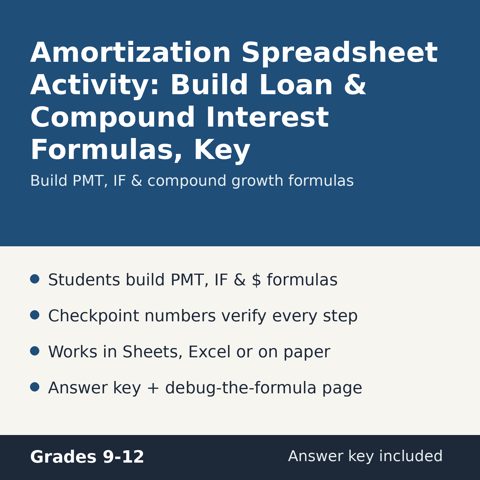
Students don't fill in a worksheet. They build the formulas.
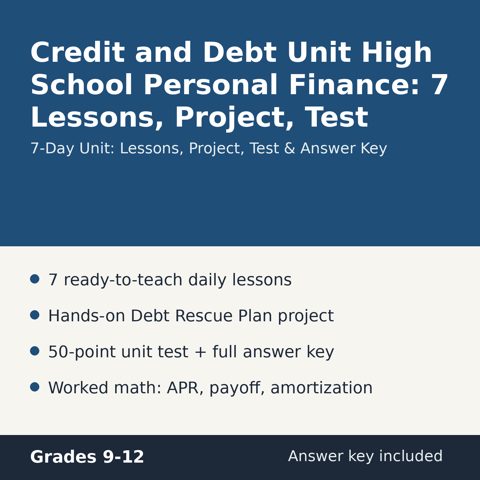
Teaching credit and debt in a required personal finance course? This is a complete 7-day unit, ready to print and teach tomorrow. No prep.
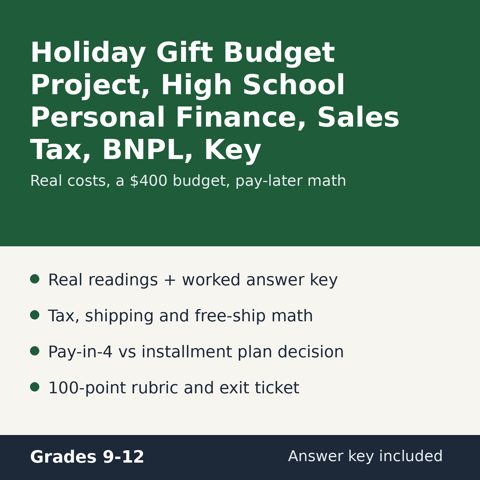
Real prices, real math, and a decision at the end. Students manage a fictional $400 holiday budget for a teen named Jordan and learn why the sticker price is never the price you pay.
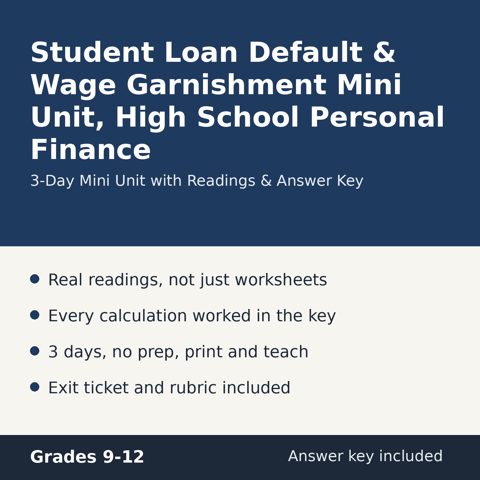
Default and wage garnishment are the part of student loans nobody explains until it is too late. This 3-day mini unit makes it concrete with real readings, real math and a role-play. No prep needed.
View on TPT →
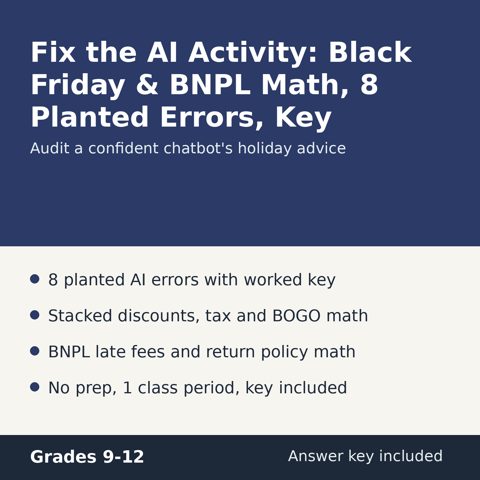
A chatbot just told Jordan the Black Friday laptop is a steal, and it sounds completely sure. It is wrong in 8 places. Your students play auditor, find every planted error and fix it with real math.
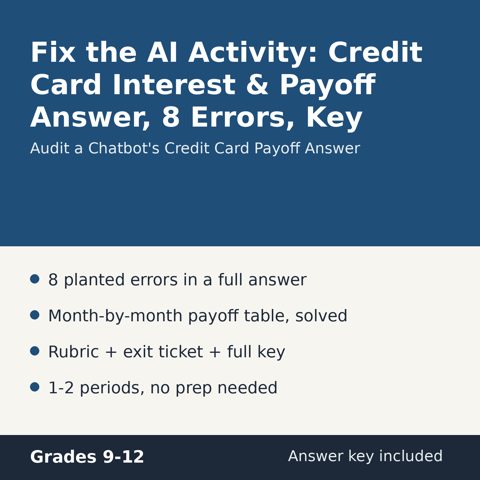
Chatbots sound sure of themselves, even when they are wrong. This activity makes students prove it.

Is the sale real? Your students are about to find out.
View on TPT →
Six no-prep consumer skills activities in one bundle, made for the holiday shopping season, plus a bundle guide with a two-week plan and a Smart Shopper Checklist.
14 resources on this topic in total. Browse the whole store on TPT →
AnnualCreditReport.com is the official site for free reports from Equifax, Experian and TransUnion, now available weekly.
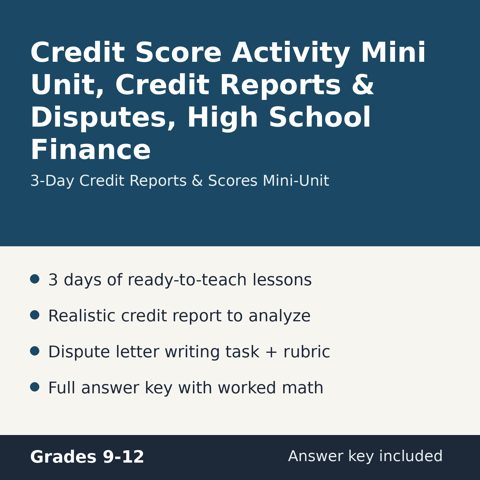
Payment history, about 35% of a FICO score, followed by amounts owed, about 30%.